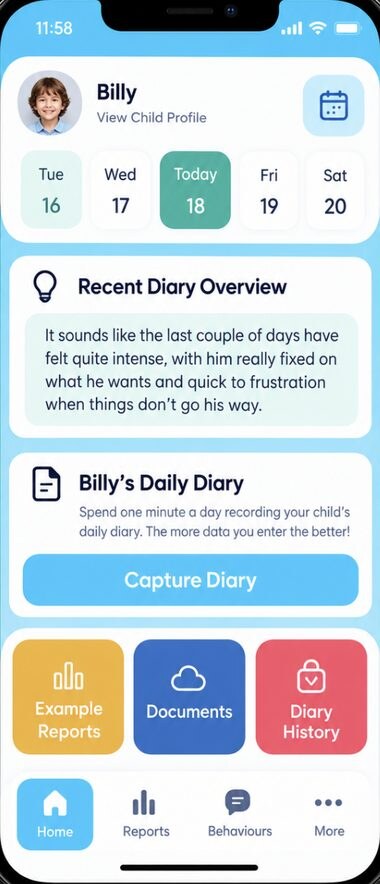
Twelve trusted places to start learning about your child
Books, websites and podcasts that families tell us are easy to get into and worth the time. Each one is chosen to help you understand what you are seeing at home, not to replace professional advice. We have added two free white papers from the SenLife team at the end.
The list at a glance
- 1The Out-of-Sync ChildBook
- 2The Explosive ChildBook
- 3Uniquely HumanBook
- 4Understood.orgWebsite
- 5Child Mind InstituteWebsite
- 6How to ADHDBook and YouTube
- 7Raising Human BeingsBook
- 8Two podcasts: Uniquely Human and The Neurodiversity PodcastPodcasts
- 9National Autistic SocietyWebsite
- 10The Reason I JumpBook and film
- 11Traits, Not LabelsWhite paper
- 12Every Moment CountsWhite paper
Resources 1 to 5
Start here
If you only have time for a few, begin with these. They explain the why behind behaviour, sensory needs and learning differences.

No. 1
- Book
The Out-of-Sync Child
Carol Stock Kranowitz. Third edition, 2022.
Understanding sensory and regulation differences, with clear explanations of why some children seek or avoid sensation.
Particularly useful for: sensory processing, autism, ADHD, DCD, regulation

No. 2
- Book
The Explosive Child
Ross W. Greene. Sixth edition, 2021.
Understanding challenging behaviour and preventing escalation by solving problems together rather than relying on rewards and punishments.
Particularly useful for: emotional regulation, ADHD, autism, PDA and demand avoidance, challenging behaviour

No. 3
- Book
Uniquely Human: A Different Way of Seeing Autism
Barry M. Prizant with Tom Fields-Meyer. Revised and expanded edition, 2022.
Understanding autism and behaviour through a neurodiversity-affirming lens. There is a companion podcast too, listed at number 8.
Particularly useful for: autism, communication, behaviour, neurodiversity generally

No. 4
- Website
- Free
Understood.org
US non-profit. School system advice is American, the explanations travel well.
Plain-English guides to learning differences, ADHD, dyslexia and executive functioning.
Particularly useful for: dyslexia, ADHD, dyscalculia, language and learning differences

No. 5
- Website
- Free
Child Mind Institute: Family Resource Center
US non-profit. Articles, parenting guides, videos and a podcast.
Reliable clinical information across ADHD, autism, learning and emotional or behavioural difficulties.
Particularly useful for: ADHD, autism, learning difficulties, behaviour, anxiety, executive functioning
Resources 6 and 7
Practical parenting
Day-to-day strategies you can try this week, from getting out of the door to handling disagreements.

No. 6
- Book
- YouTube and website
How to ADHD
Jessica McCabe. Book published 2024, the YouTube channel is free.
Executive functioning and ADHD explained by someone who lives it. Short videos if you have ten minutes, the book if you want the full toolkit.
Particularly useful for: ADHD, executive functioning, emotional regulation

No. 7
- Book
Raising Human Beings
Ross W. Greene. Same author as number 2, written for every family.
Parent and child collaboration and autonomy: how to have influence without constant conflict.
Particularly useful for: parenting, autonomy, conflict, emotional regulation across neurodivergent profiles
Resources 8 to 10
Listening and lived experience
Hear from autistic and neurodivergent people directly, and find UK-specific help with education and support.
No. 8
- Podcasts
- Free
Two podcasts worth your commute
Particularly useful for: autism, ADHD, neurodiversity, lived experience, parenting

Uniquely Human: The Podcast
Hosted by Barry Prizant and Dave Finch
Autism, neurodivergence, communication and lived experience, with autistic guests at the centre of the conversation.
Listen at uniquelyhuman.com (opens in a new window)
The Neurodiversity Podcast
Hosted by Emily Kircher-Morris
Conversations on the psychological, educational and social needs of neurodivergent people, including ADHD, autism and parenting.
Listen at neurodiversitypodcast.com (opens in a new window)

No. 9
- Website
- Free
- UK
National Autistic Society: parent and family resources
UK charity
UK autism information, education and navigating support, including your rights and what to expect from services.
Particularly useful for: autism, UK services, education, rights, family support

No. 10
- Book
- Documentary film
The Reason I Jump
Naoki Higashida, translated by K.A. Yoshida and David Mitchell. Documentary directed by Jerry Rothwell, 2020.
A first-person perspective on autistic experience from a non-speaking teenager, written in short questions and answers.
Particularly useful for: understanding autistic experience and communication
A note on this one: the book was written using an alphabet grid, and some researchers have questioned how independently it was produced. Read it as one personal account, alongside the evidence-based resources above.
Resources 11 and 12
White papers
Two free guides from the SenLife team, for making the most of the time before, during and after an assessment.
No. 11
- White paper
- Free
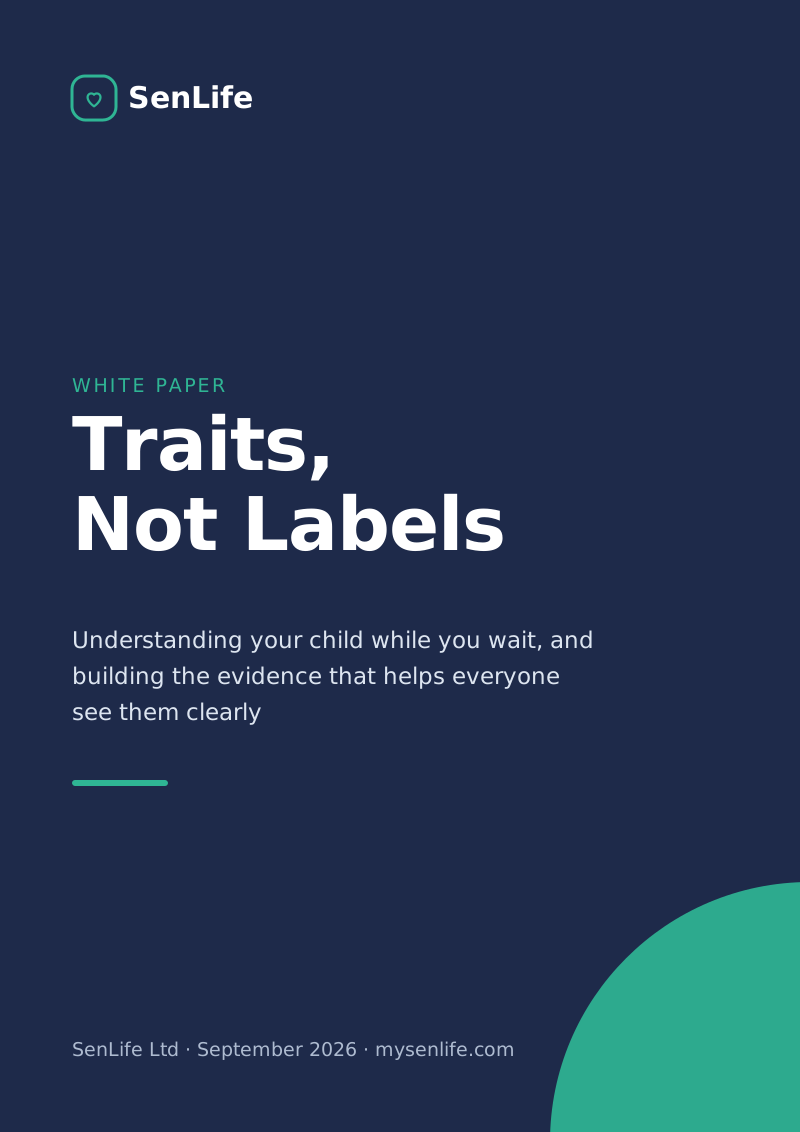
Traits, Not Labels
SenLife, September 2026. Free to read and download.
What to do while you wait for an assessment: understand your child’s traits, shape home and school around them, and build the evidence that helps others see them clearly.
Particularly useful for: waiting for assessment, understanding traits, strengths, school adjustments
No. 12
- White paper
- Free
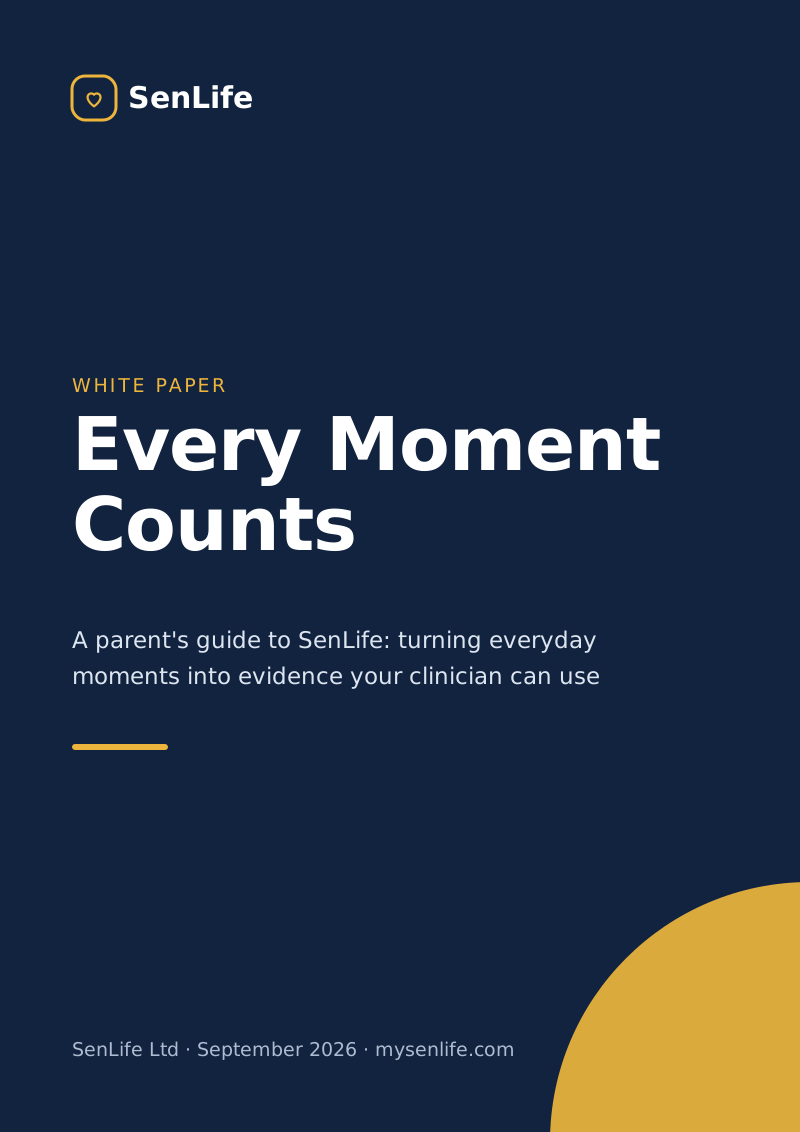
Every Moment Counts: A Parent’s Guide to SenLife
SenLife, September 2026. Free to read and download.
How recording everyday moments, in about a minute a day, gives your clinician your child’s full story before the appointment and keeps helping afterwards.
Particularly useful for: preparing for assessment, clinician appointments, therapy and medication reviews
These are independent resources
SenLife does not own or control the books, websites and podcasts listed as resources 1 to 10, and listing them is not medical advice. Resources 11 and 12 are written by SenLife. SenLife supports communication; it does not diagnose, treat or replace professional judgement.
Visit the Trust Centre